
Atelier 41 Class 4: Visual Language
The assignment was about visual language. In the previous class, when the assignment was introduced, we looked at commercial images (FedEx, F1), the work of Molly Bang, and photographs by Saul Leiter and Heather Evans Smith. Visual language can be expressed through line, space, form, texture, color, depth, pattern, negative space, light and shadow, and aspect ratio. I am still developing my own definition of visual language in photography. The phrase that comes to mind is "consistent style," though I'm not sure yet.
When choosing my theme, I also thought about how intentional I wanted the photos to be as a set. None of the three sets I had brought to class so far had a specific theme, so I wanted this assignment to be a clear set.
I decided to photograph finished food in bowls and dishes, all shot the same way. The idea came from a TV series in which the protagonist photographs every vessel after the meal is eaten. I used the texture and color of each bowl, and the mysteriousness of the food, as the variables.
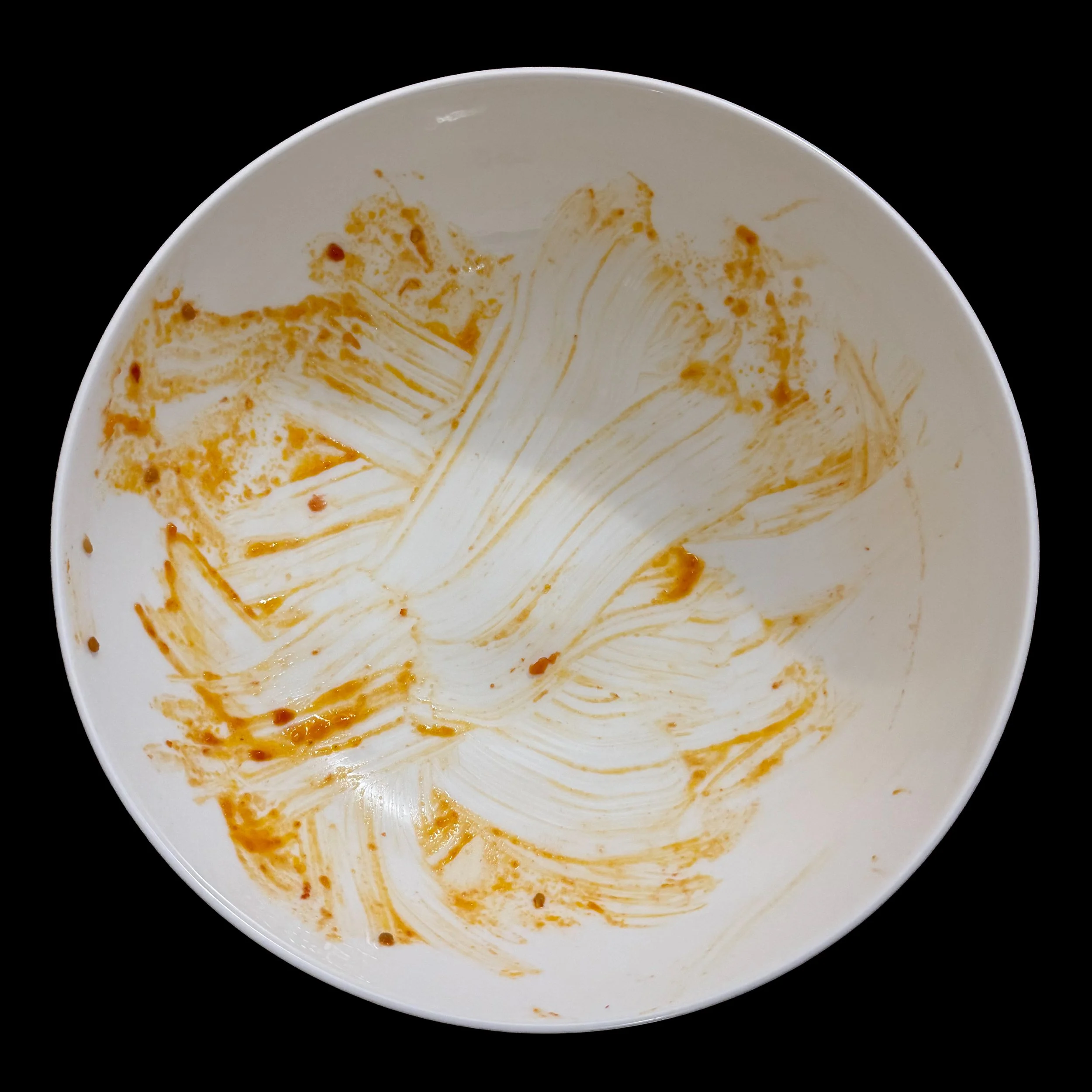
1. Tomato sauce pasta
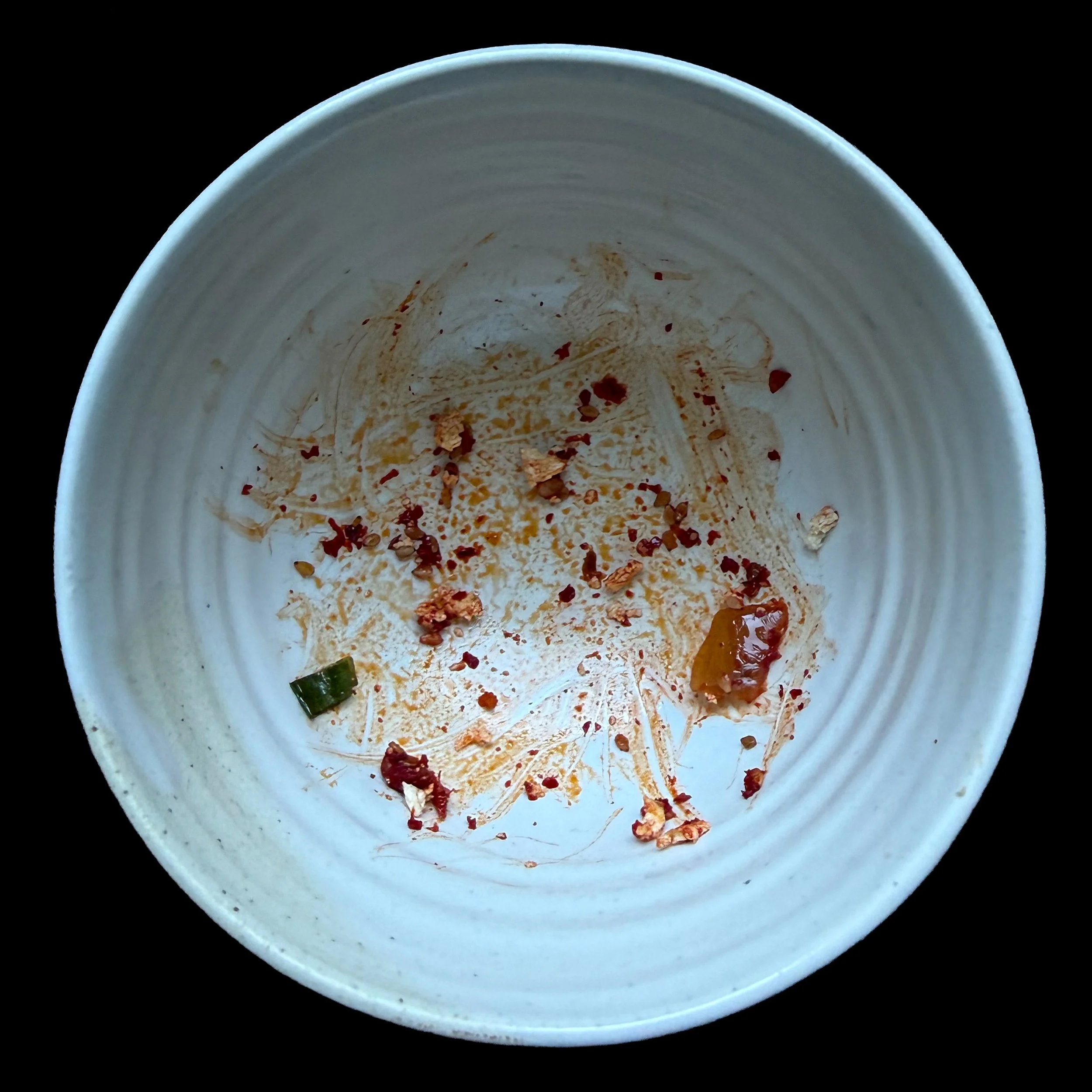
2. Seasoned balloon flower root
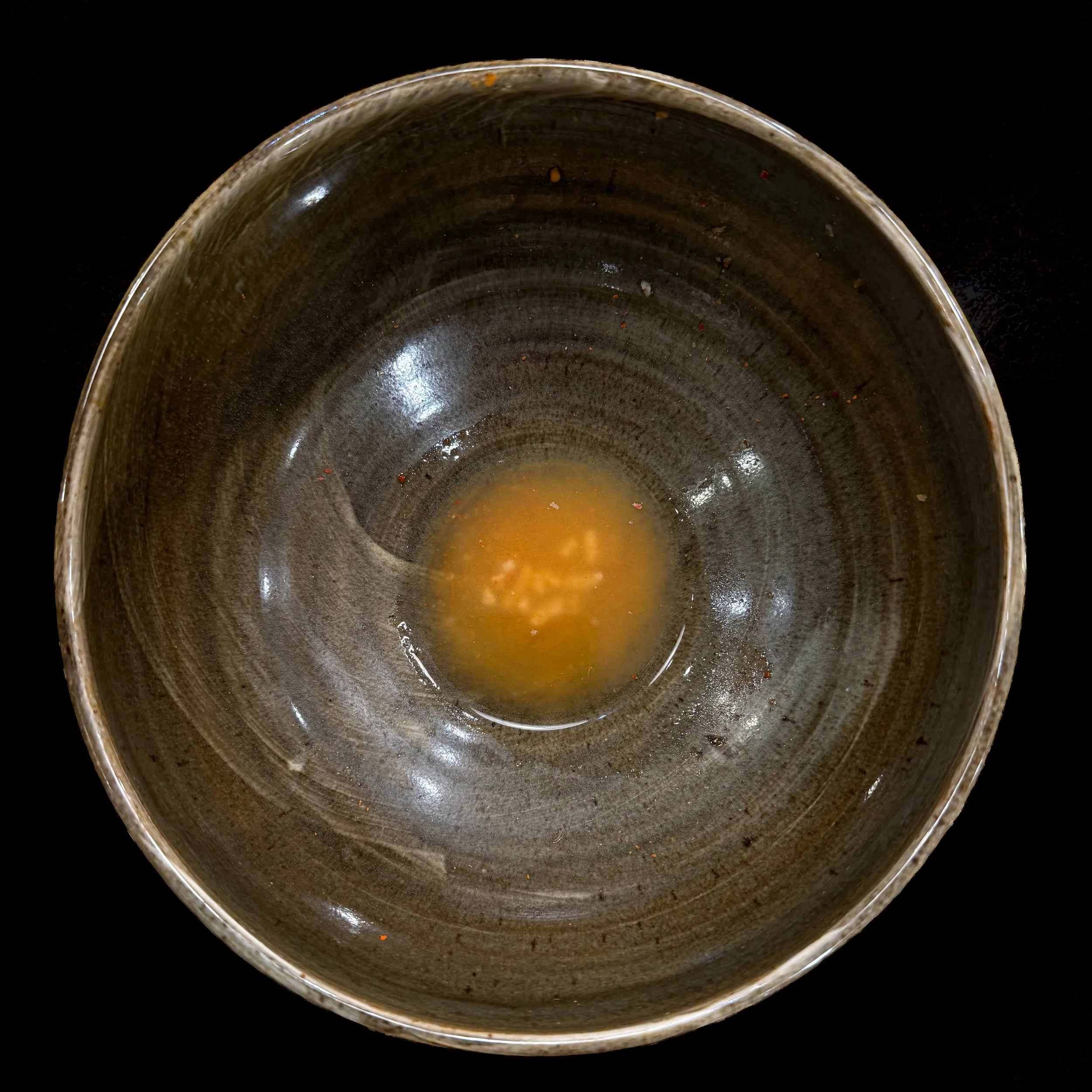
3. Kimchi Gukbap (김치국밥)

4. Ramen
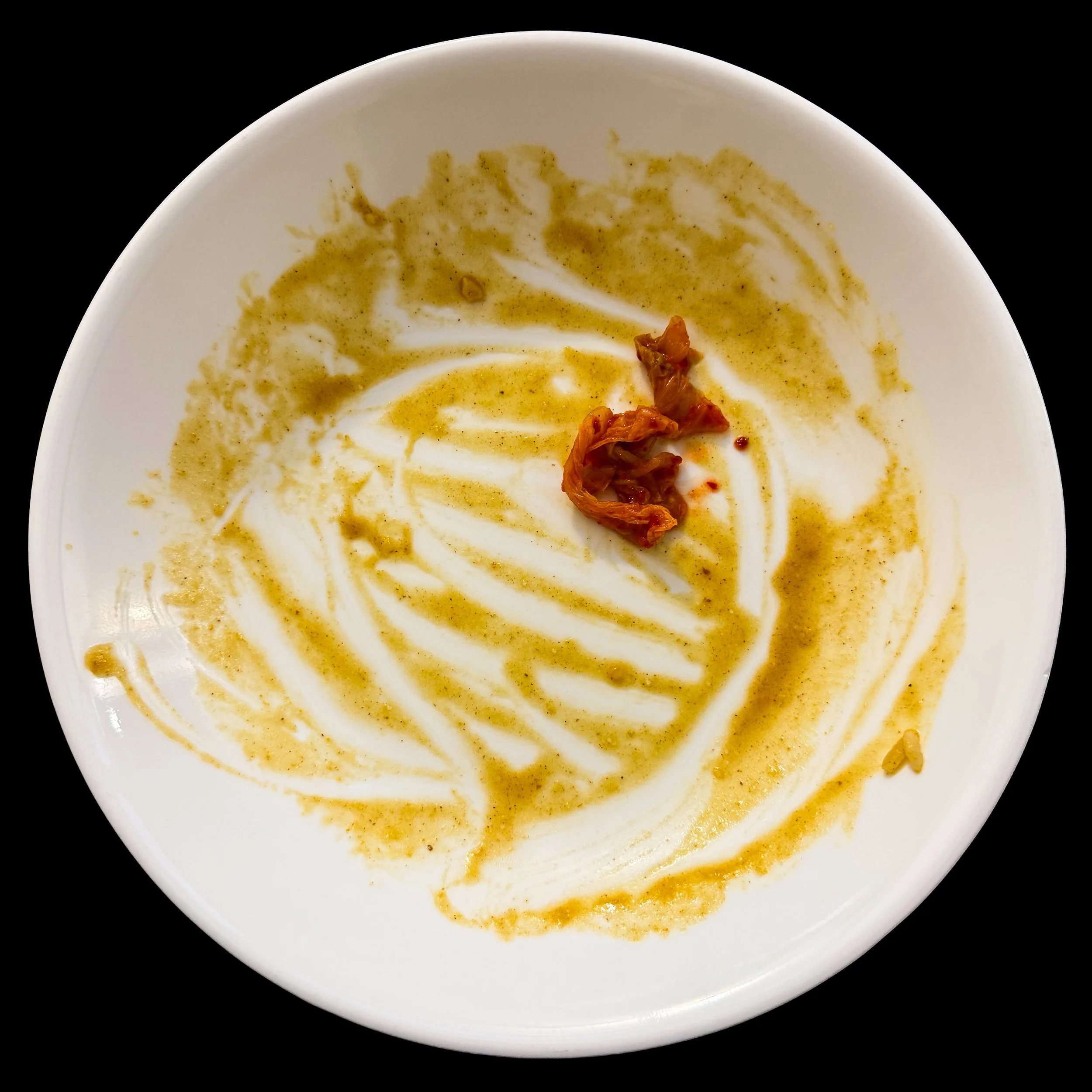
5. Curry
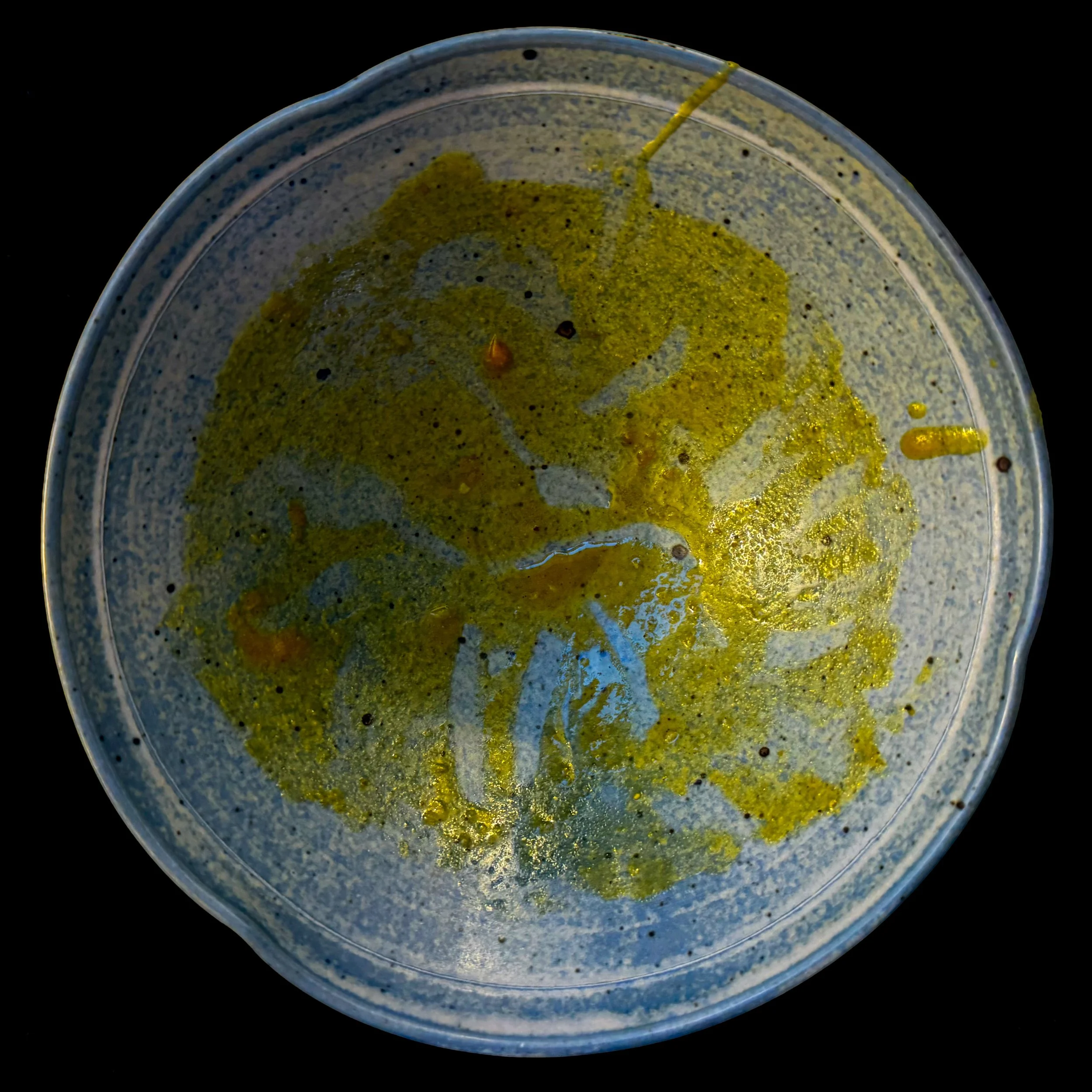
6. Curry (2)
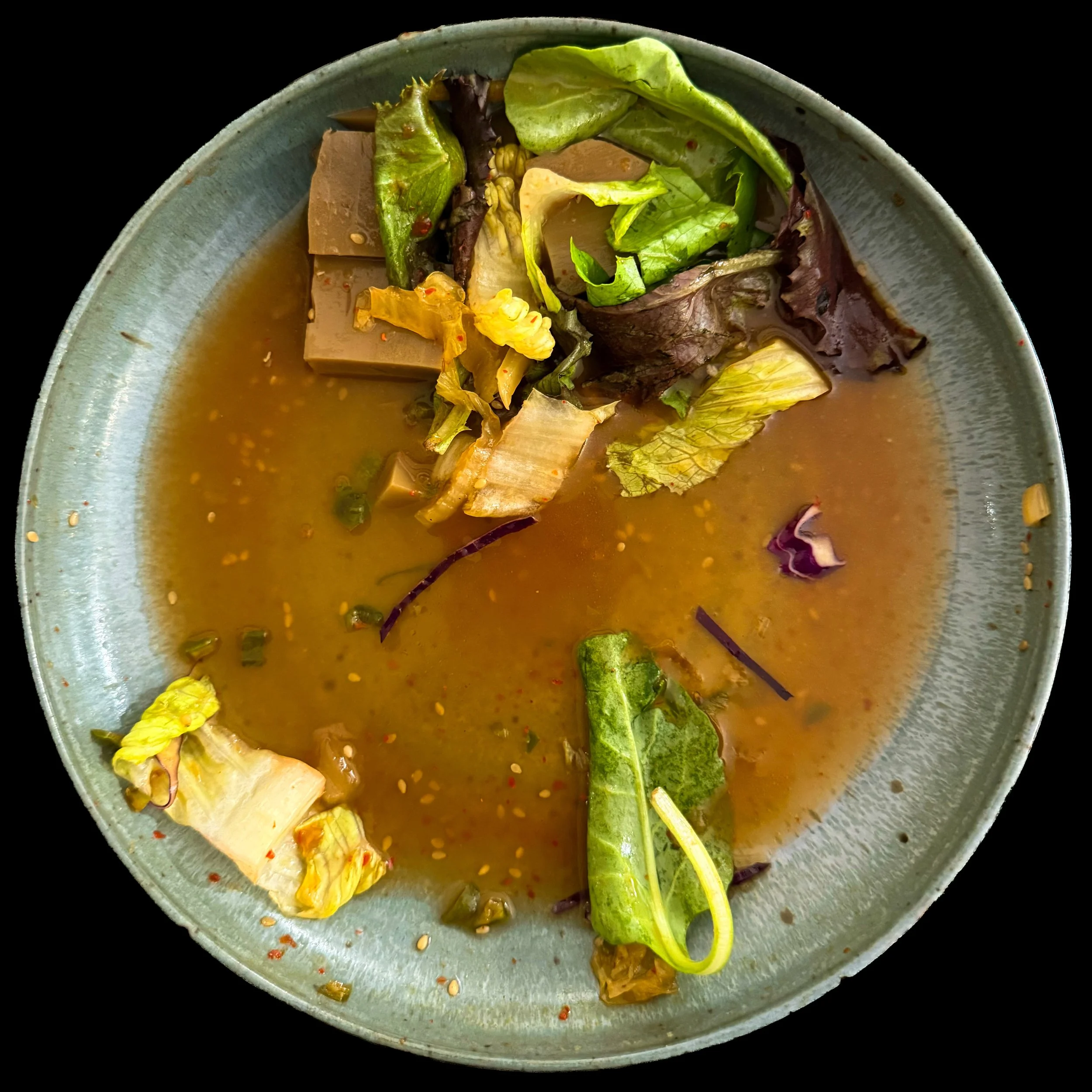
7. Acorn jelly salad
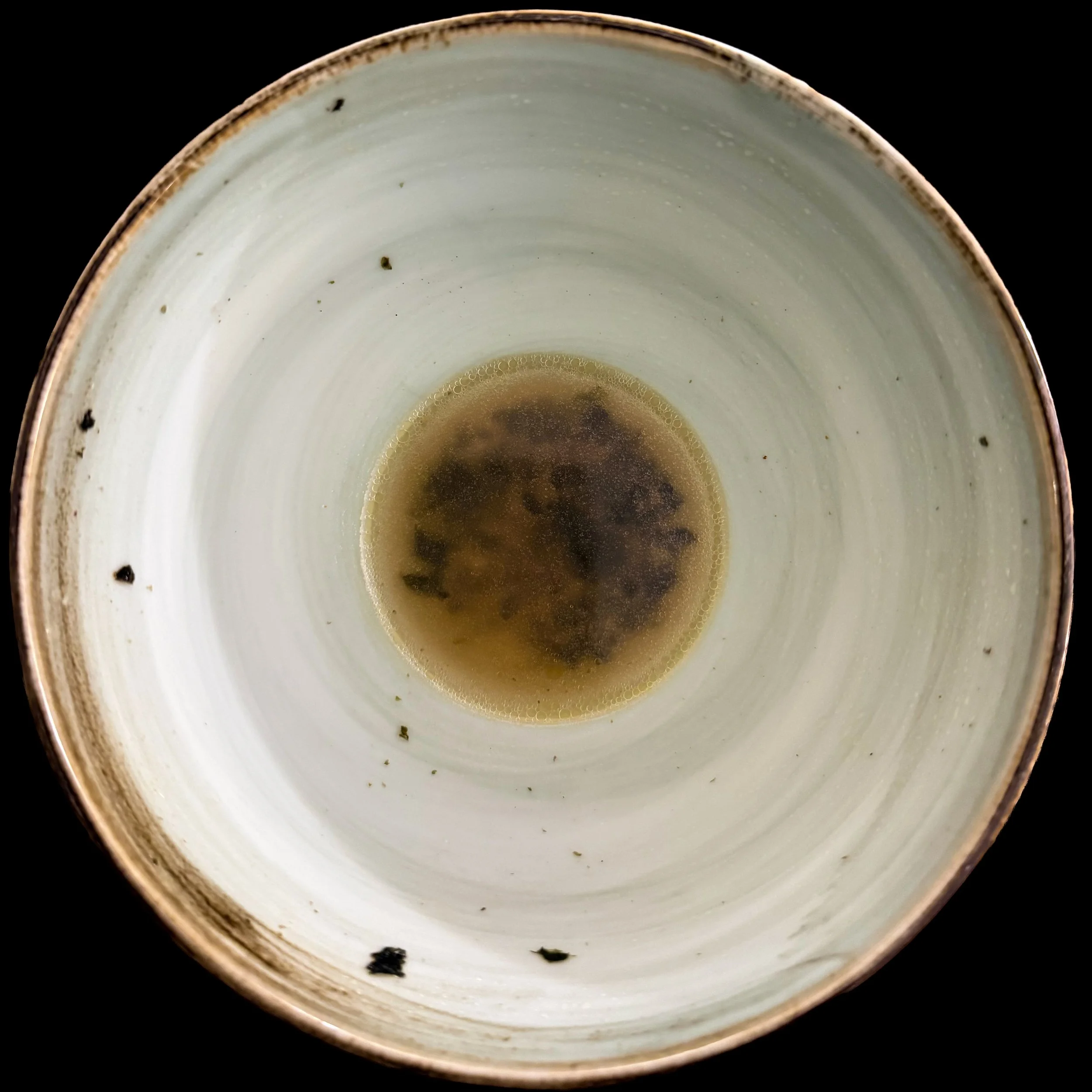
8. Deok Guk (떡국)

9. Tomato soup
It was difficult to sense how my classmates received my work. The first person mentioned it felt like a documentary. "Some were taken after the meal, some during the meal." "The Deok Guk (떡국, rice cake soup) in the white bowl and the Kimchi Gukbap (김치국밥, kimchi and rice soup) in the brownish blue bowl were more visually pleasing than the others."
Other classmates brought:
Black and white photos of objects indoors under dim light
A baking scene with unfinished circles
Spacey images of eggs that told a story
Birds
Different circles
Scenes with negative space
What I learned:
I keep being drawn to photos of things I can understand easily but that have a twist, humor, or a different pattern behind the simple objects. The abstract photos my classmates brought didn't catch my eye as much.
A photo of a fork against a dark black background that turned out to be an egg with a fork's shadow: fun and visually striking.
A small ball on a manhole cover with lots of ground around it: fun, two circles, and the circle was the theme.
I agree that when a picture has an obvious subject but isn't (just) about that subject, it becomes more interesting. A bird photo that isn't about birds, a seagull photo that isn't about seagulls, a cat photo that isn't about the cat.