
What I noticed this time, with eyes that belong to both countries.
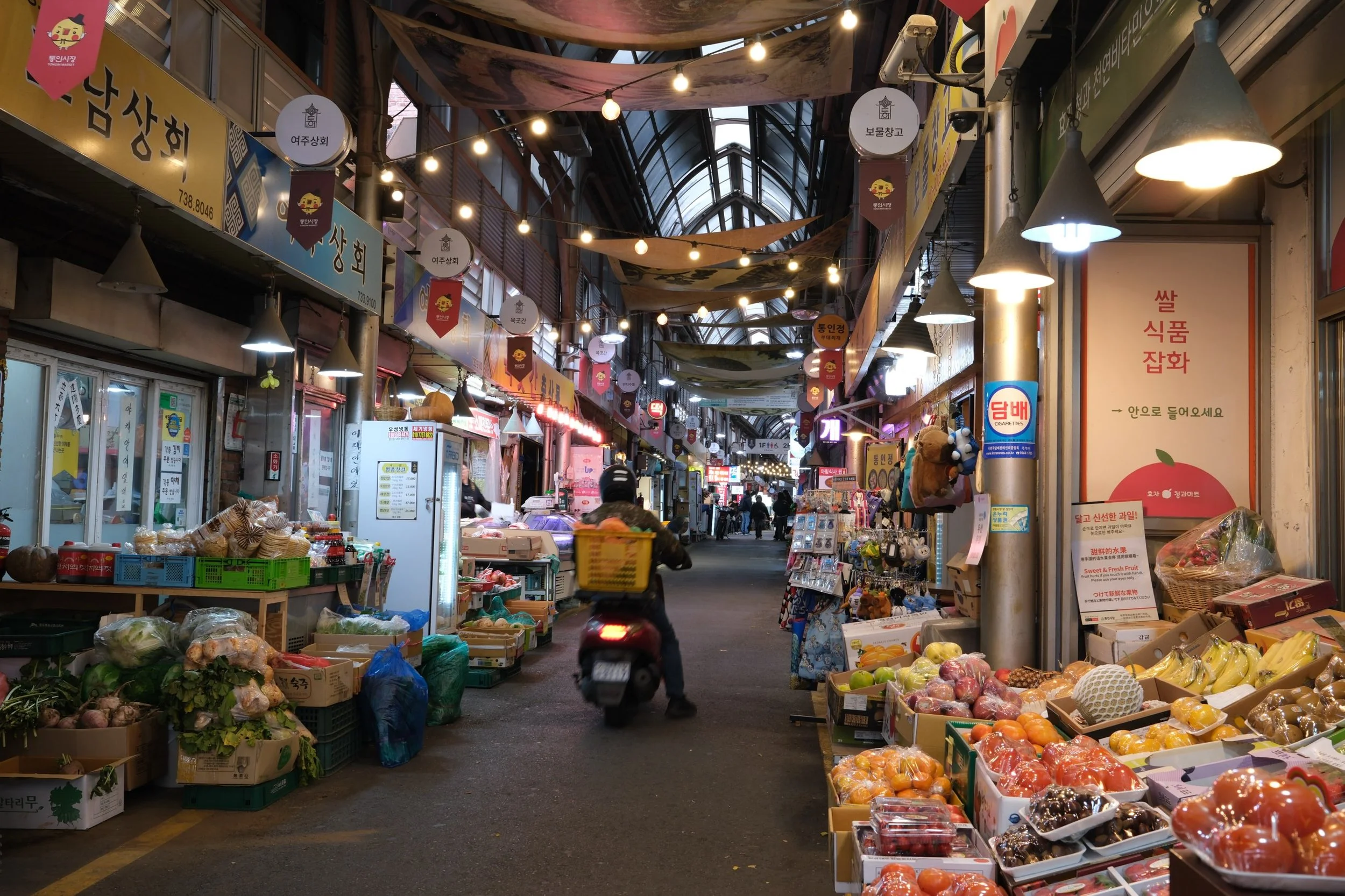
Tongin Market, Seoul
I came back yesterday from a week-long trip to Korea. The trip was mainly to see my mother. It was great seeing her and some of my friends. I also wanted to take pictures in different parts of Seoul: people and street scenes. I am thinking of making a photo portfolio comparing cultural scenes in Korea and in the US. Choosing the place, the time, and the angle was much harder than I thought. Everything felt more like a documentary. My goal is to bring beauty, meaning, and curiosity at once.
Below are the three stories I remember most.
Connecting with a friend
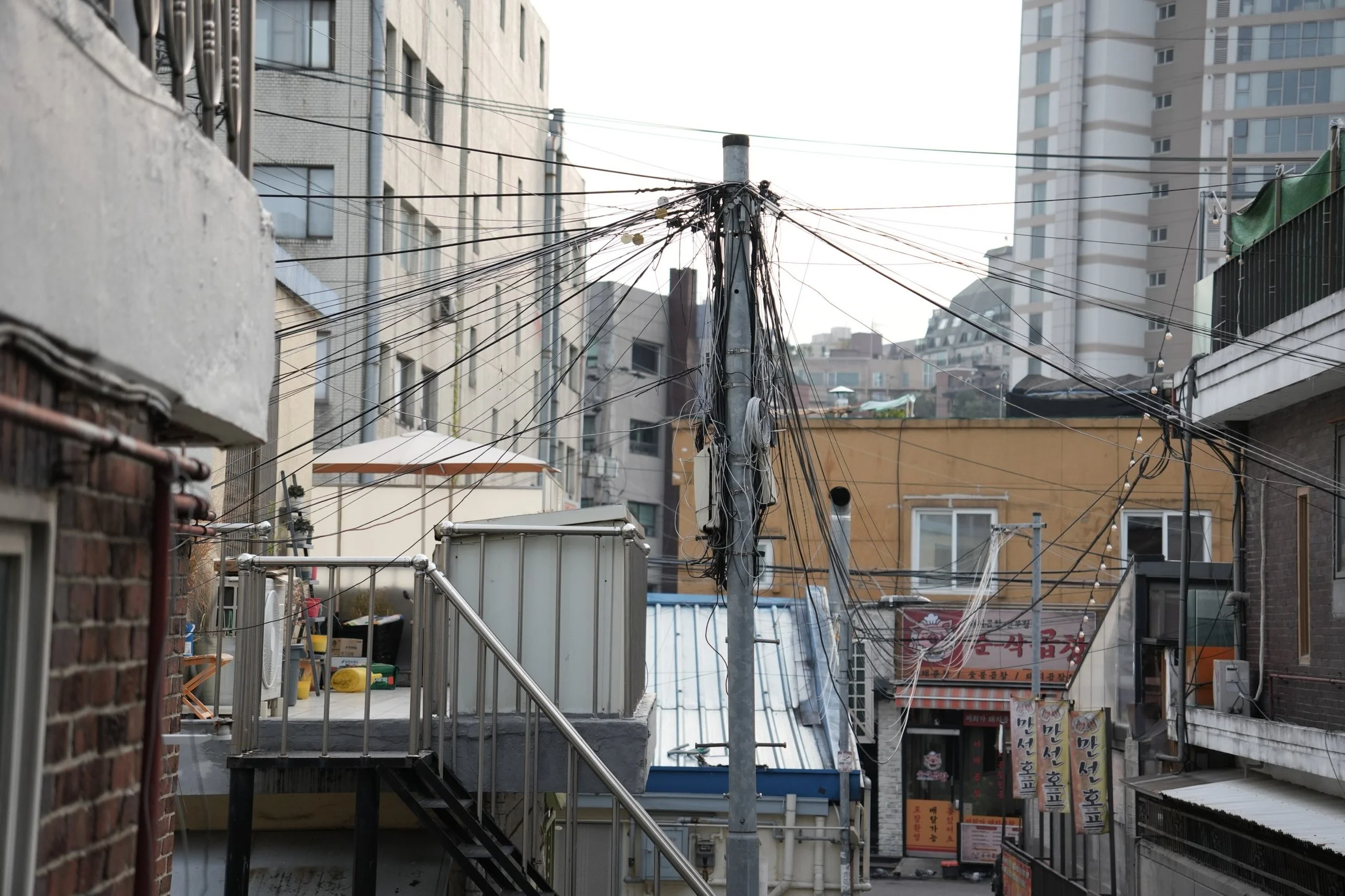
Wires over an alley, Seoul
One evening I sat down with one of my close friends. He shared that he has been avoiding deep relationships at work. He has lived abroad since his 30s, and he said he has no friends there, even after more than 15 years in that country. As we talked more, I learned that he chose not to have friends at work for fear of getting hurt. I couldn't hear exactly what that meant, but my guess is that he worried others wouldn't reciprocate his vulnerability, or would use what he shared in ways that weren't in his best interest. He said he is positive, casual, and respectful with others, but doesn't want to be connected any deeper than that. I am very close to him. Hearing this was surprising and sad, and I felt connected to him at the same time.
As a coach, I support my clients in getting to know each other on a personal level at work. I personally take great joy in knowing people deeply at work. But I also recognize that many people follow my friend's path.
Exam day at my father's school
On Thursday, November 19, I went to Yongsan High School, my father's alma mater, to take pictures. It was the day of the national college entrance exam. Banks, government offices, private companies, and even flights are delayed for this one national event. I wanted to capture students walking into the exam.
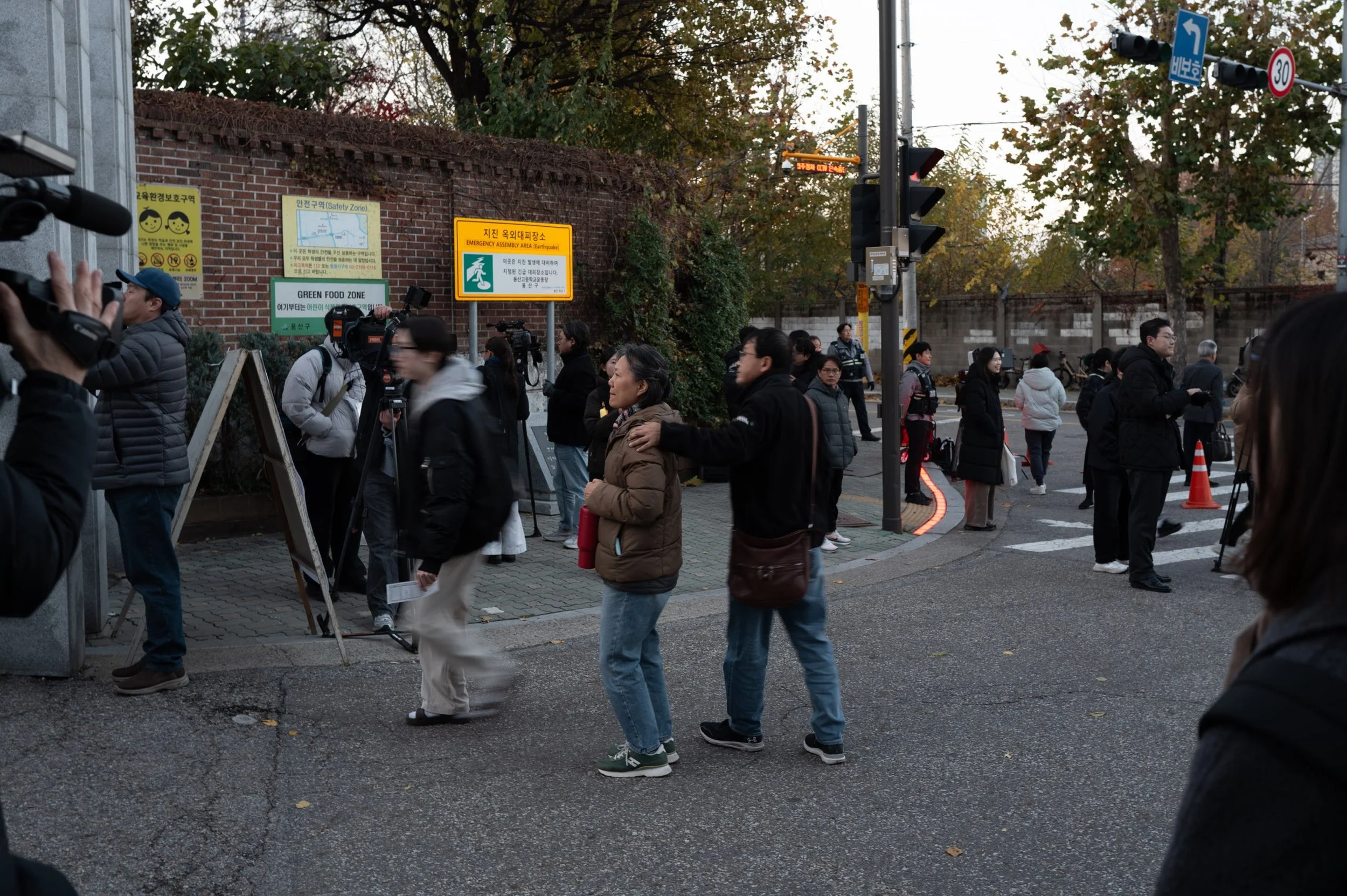
Exam morning at Yongsan High School
My Korean phone, and every phone around me, rang loudly three times that day: emergency alerts at maximum volume, even on silent, to catch anyone hiding a phone in an exam room. They followed a wave of AI-assisted cheating this year, from a top scorer on the tax accountant exam who confessed to using a hidden camera, to candidates caught wearing smart glasses. That day the alerts found 54 hidden phones, and surprised many people on the streets and in cafés, including me.
Whenever I went into a coffee shop, I saw groups of moms talking about which 학원 (hagwon, private cram schools for the entrance exam) they should send their kids to. There are so many stories of this obsession, and of the stress that follows, even suicides, in families with high schoolers. In one episode of 참교육, a Netflix drama, mothers force their high school sons and daughters to take "study drugs," prescription pills, like ADHD medication, misused to stay focused for hours.
I remember my own entrance exam day. My father drove me there. It was dark. I was calm in the back seat. I think he was dropping me off on his way to work. I don't remember any words of wisdom from him. I don't remember much, which is fine. It is funny to think about that moment now, but not so funny to be reminded that the phenomenon continues, or has even grown stronger, in my mother country.
The salary peak
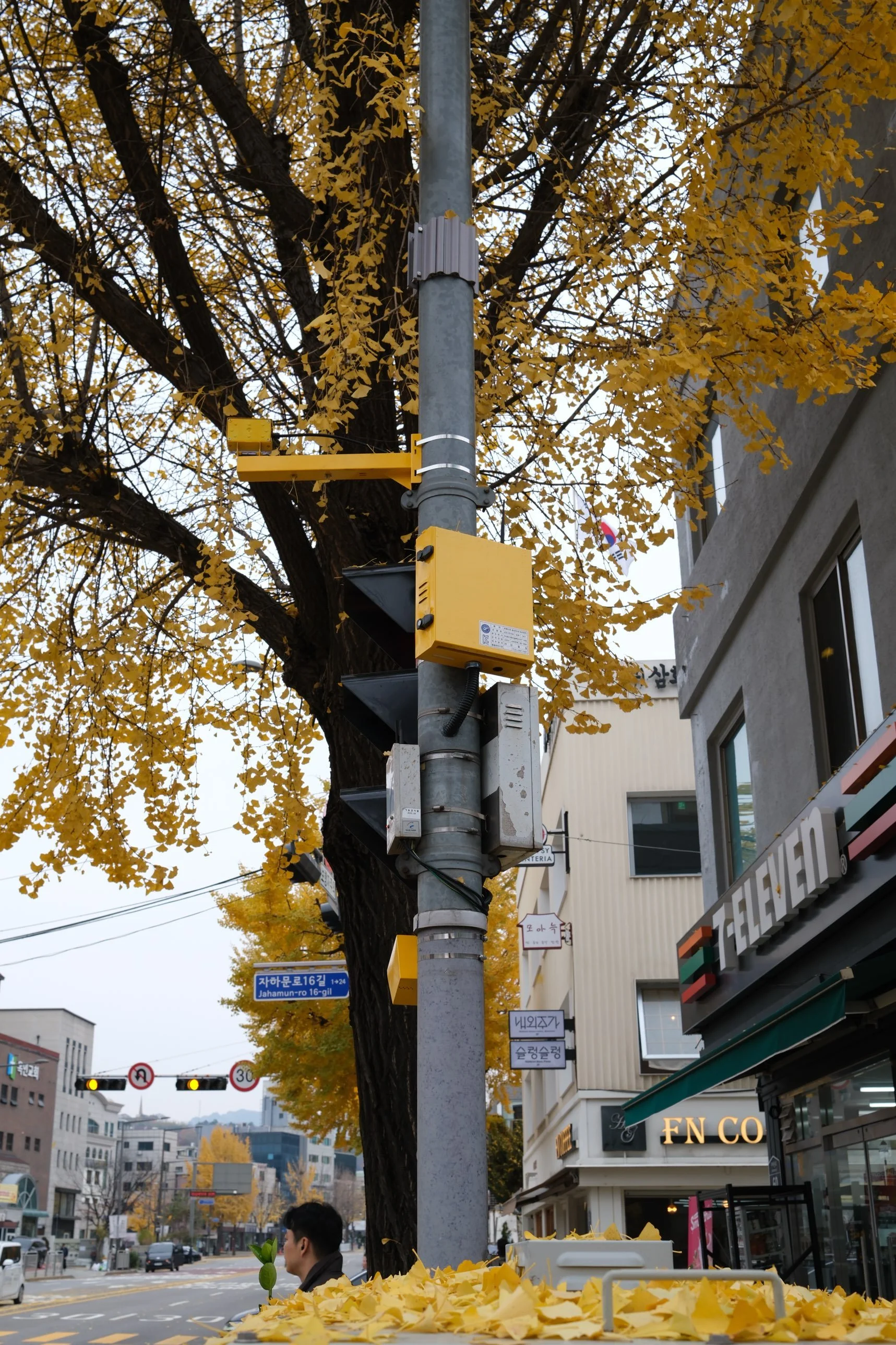
Ginkgo on Jahamun-ro
While I was in Korea, I went to a reunion of alumni from Dankook High School who went on to Yonsei University together. During college, I got together with this group regularly. I knew the gathering had revived in the past five years, but I had never attended because I live in the US. This time I sat and talked with two of my 선배 (sunbae, alumni older than me), both two years ahead of me.
Minsoo and I started talking about how hard it is to give feedback to team members. Suddenly he said, "Joonki, this feedback effort might be of no use, because I will face the salary peak option at the end of the year."
Many companies use the salary peak system to speed up generational change. It allows, or forces, people about five years from the retirement age of 60 to choose: stay until 60 with a salary that steps down each year (for example 70%, 60%, 50%, 40%…), or leave now with a special bonus of roughly 30 months' salary.
Jaehyun, who had chosen to leave with the bonus, said he really didn't like how his predecessors who stayed looked. To him, they were just waiting to leave, without any meaningful work. Minsoo seemed to want to stay until retirement, but he faced two problems. The salary decline at his company is a little too steep, and the bonus serves him better economically. More importantly, no one in his department has chosen to stay, so it would be quite difficult to remain with dignity.
Both agreed that it is almost impossible to find another job after leaving the one company they have served for so long. "Who will hire 55-year-olds now? My daughter just graduated from college and is having difficulty getting a job."
I moved to the US from Korea in my early 30s. When I learned that in the US any of us can be laid off at any time, I felt fear. In Korea, letting people go is practically impossible unless they are caught in serious misconduct, and there are reasons for that. But now, looking back, I feel good that I have been training myself to find new opportunities, build my network, and create my own career. I introduced Designing Your Life to Minsoo. I hope he can embrace designing his own future.
* * *
Korea is a close but distant place to me now. I am excited to visit, and glad to spend time with my mom and friends, but I feel a little too hurried. The culture of wanting others' validation is still true, and whenever I visit Korea, I feel I become my younger self, the one who was ruled by those feelings. I need to remind myself that I am no longer that Joonki.