
Atelier 41 Class 9: Second Experiment for the Main Project
For my project themes, remembering my mother and "different but not that different," I decided to try still life. I was partly influenced by Miyako Ishiuchi's Mother's series.
Ishiuchi photographed her mother's belongings as still lifes. The photos looked simple yet powerful, and the tone matched the theme.
To prepare my own still lifes, I decided to use some of the plates and utensils my mother gave us. I visualized the shots and watched some tips on still life photography.
I set up in a small open space in the corridor in front of Jessica's room, using a folding table. I bought cheap black and white cloths to keep the background clean and not distracting, but the wrinkles didn't go away. Then I bought large white paper, but it was still difficult to create a surface that wasn't distracting. Looking back, I could have thought more about other surfaces and backgrounds besides a plain, non distracting one.
I worked with AI to explore different ways to show these Korean dining objects, and came up with three or four ideas. For lighting, I thought I could use a focused light at night. But in general, I wasn't sure how different light would affect a photo. I didn't think much about what kind of light creates what kind of mood.
These are the photos I brought to the class, followed by one variation I made afterward.
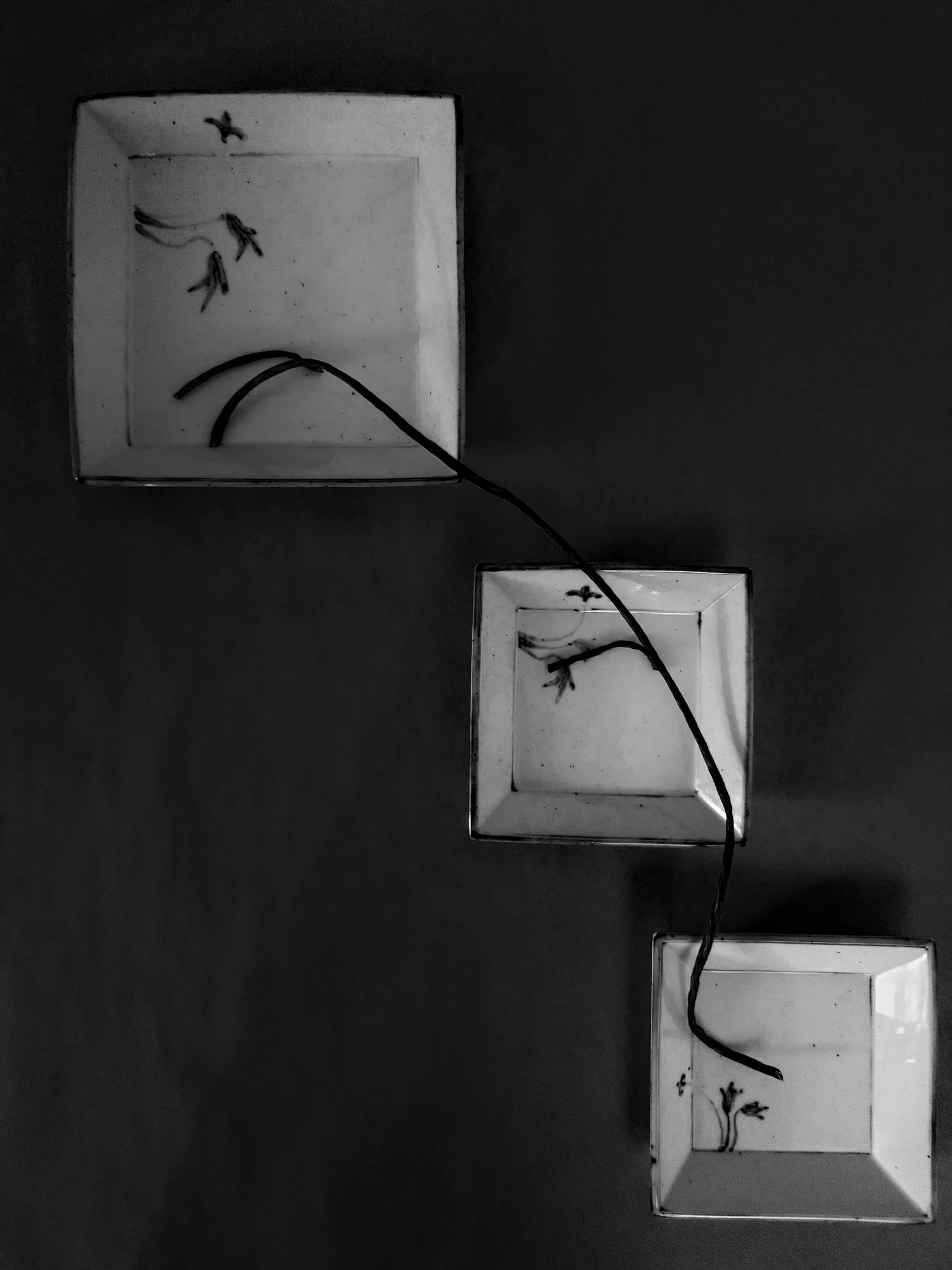
1. Three square plates and a thread
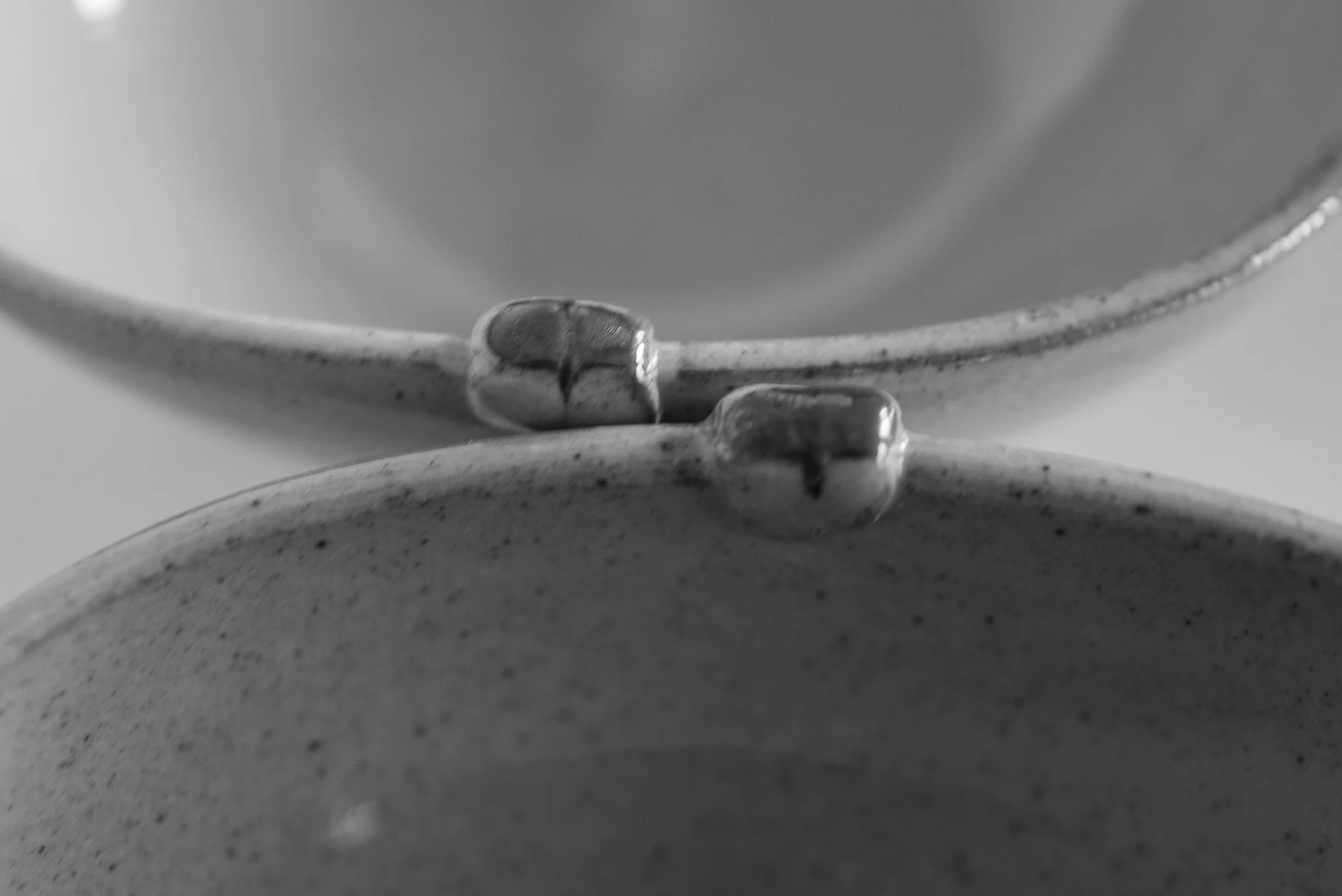
2. Two bowls, rim to rim
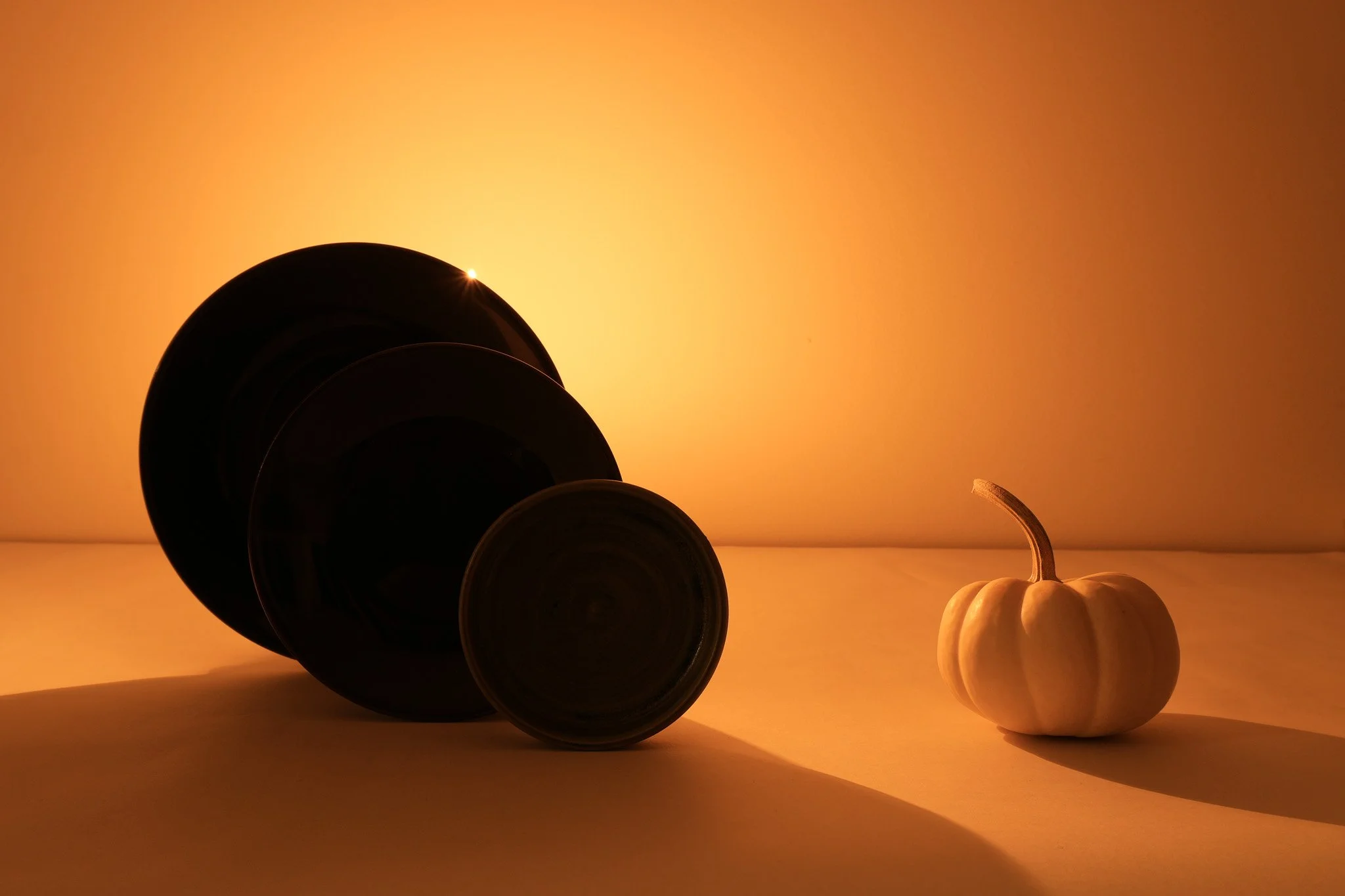
3. Plates and a white pumpkin, in color
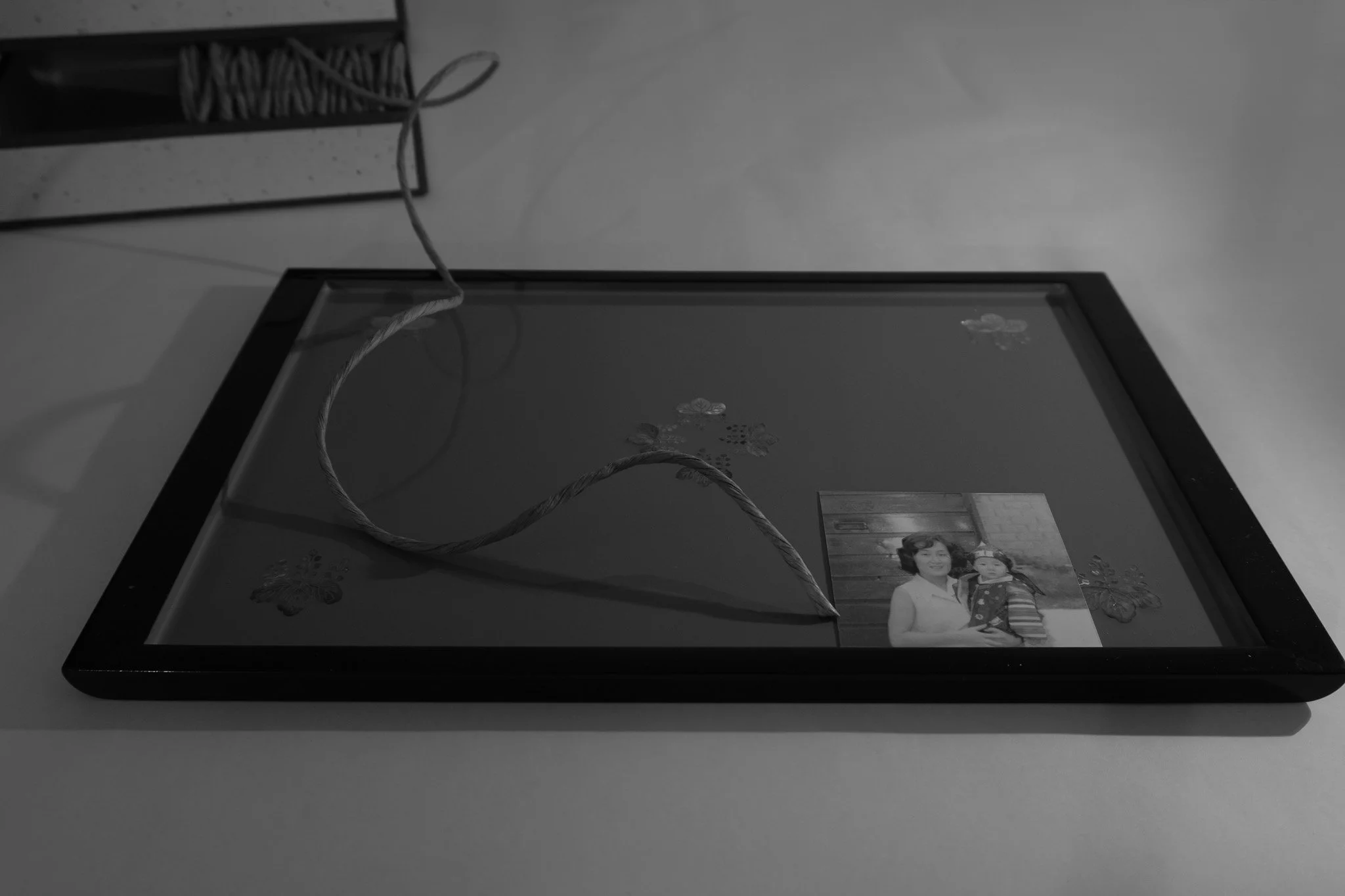
4. My first birthday photo with the long life thread
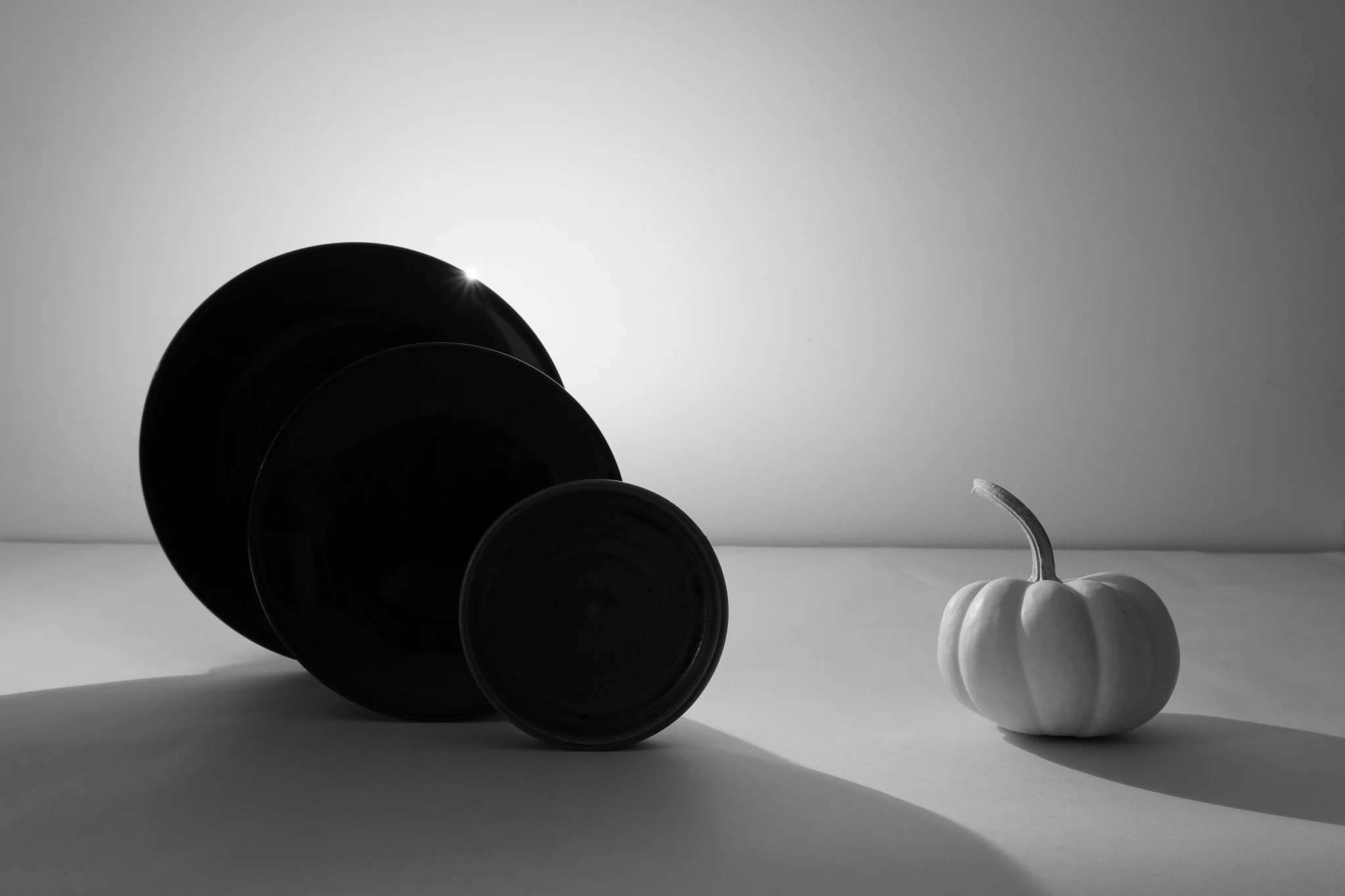
5. Plates and a white pumpkin, in black and white
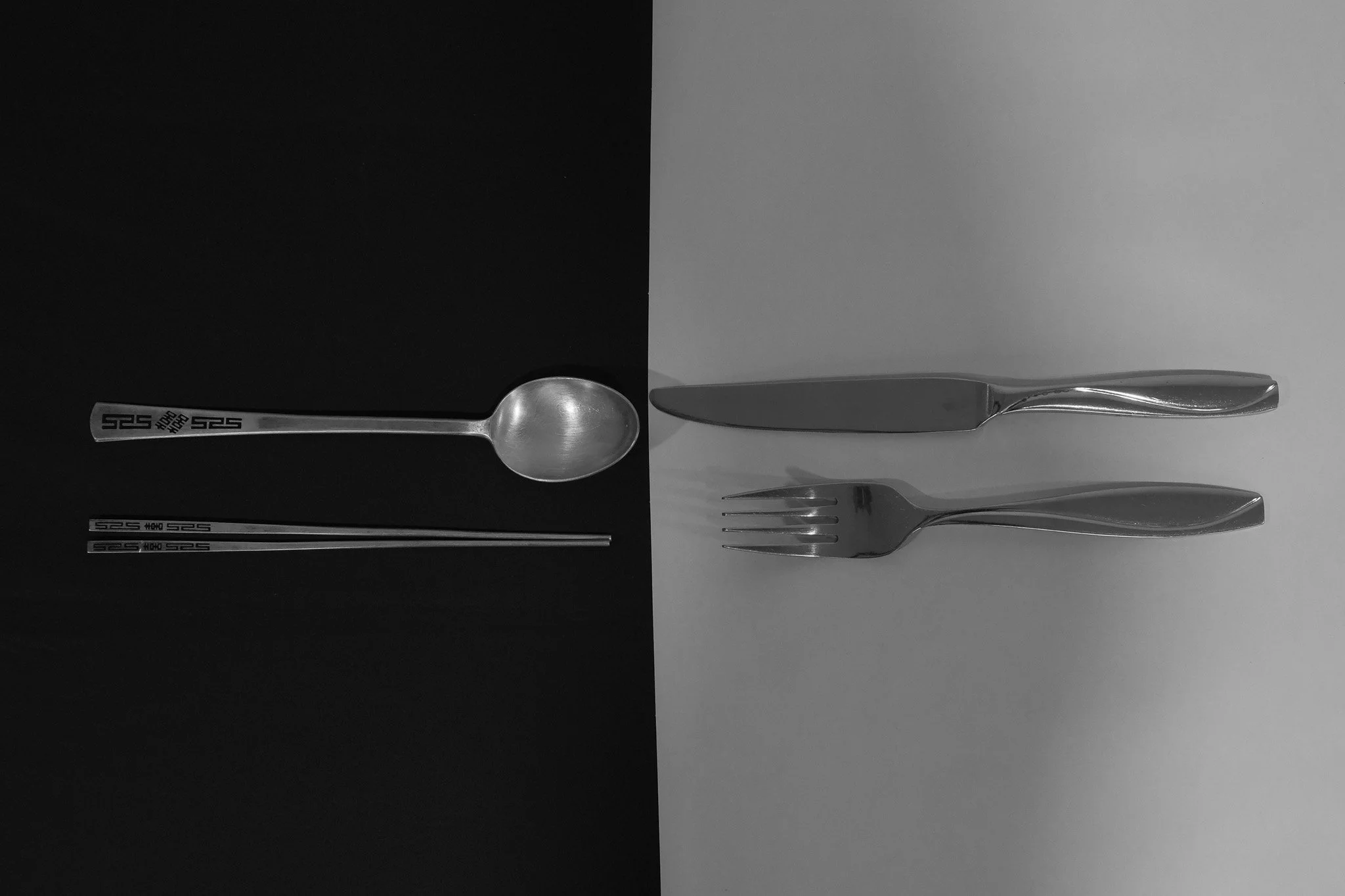
6. Spoon and chopsticks, knife and fork
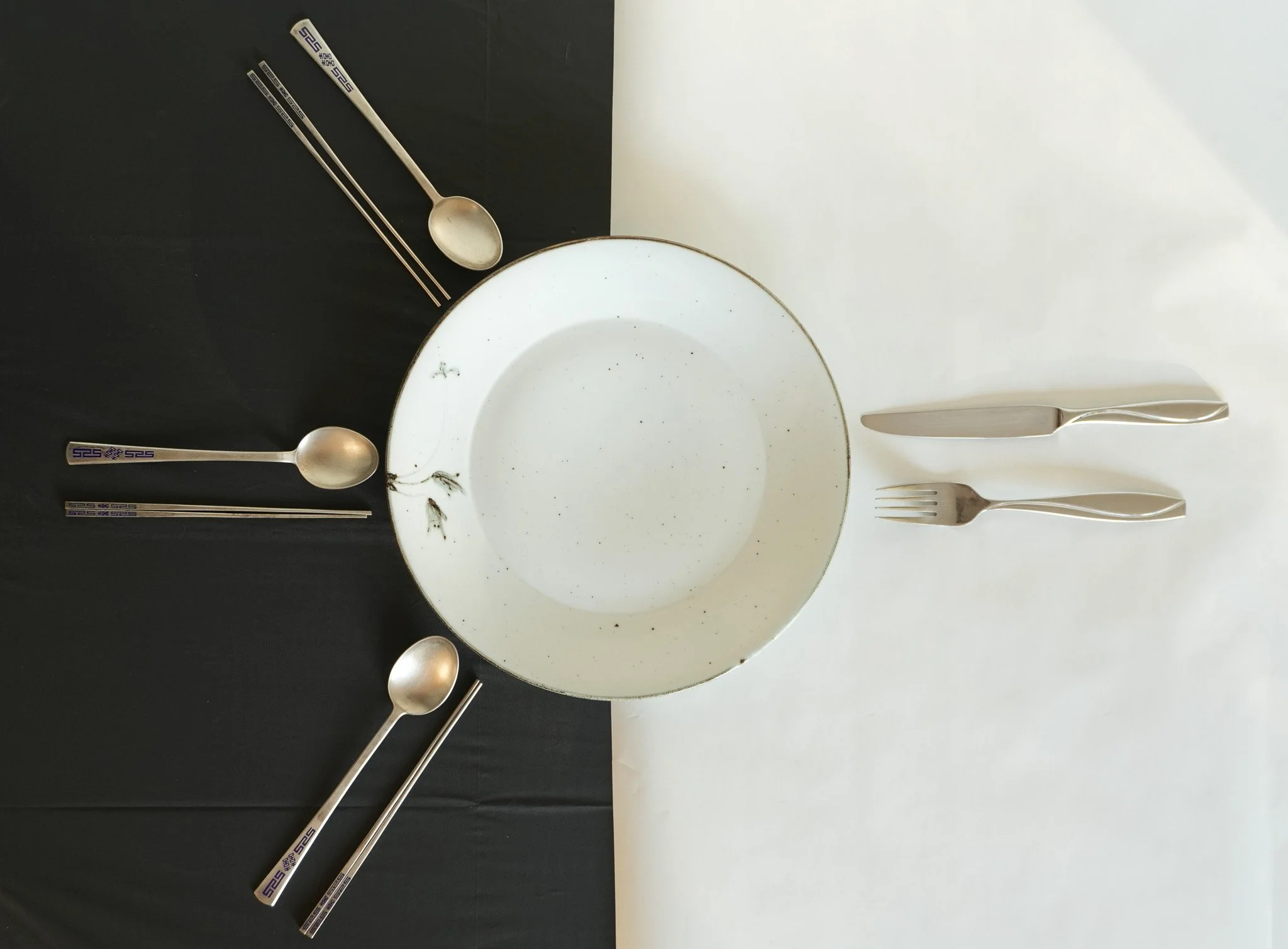
7. After class: the shared table and the single plate
In the class, my fellow students and the instructor mentioned:
The instructor asked why I brought all black and white photos. We talked about how difficult, and how important, light is. When I set up, I thought color wouldn't add much beauty or information, and that an all black and white set could be stronger. She suggested I work on the light.
One classmate noticed that in the utensils photo, the spoon and chopsticks on one side and the knife and fork on the other are all aligned and point the same direction. He suggested trying variations. He also suggested pairing my birthday thread photo with a comparable image on the right, using the utensils photo as the anchor, so people recognize that it is about the differences in a baby's birthday. I liked the idea. The morning after class, I made a variation of the utensils photo with a plate and more spoons and chopsticks on one side. It shows that most Koreans eat together from shared dishes, especially jjigae (찌개, stew) and banchan (반찬, side dishes), while in the US most people eat their own meals.
One classmate found the three square plates with a thread intriguing: the line goes off into the dark background and comes back again onto a plate.
One classmate pointed out the left and right (parallel) structure in the utensils photo and in the photo of the two bowls' side ornaments.
My reflection:
I like the idea of comparing Korean and US culture (plates, 1st birthday rituals, or something else) left and right. Some can be more literal, which then set the tone for comparisons that might be subtle too.
I'd like to learn more about using different sources of light, and bring color to these still lifes.
As a group, we talked about how to use abstracts, how to produce images that can make audience to pause, think, and want to know more. I like the direction of using non abstract objects that can create curiosity, humor, and stories.
All classes | Previous: Class 8, First Experiment for the Main Project